Even Klaus Schwab Is Building a Personal Brand on LinkedIn. Here's What That Tells Us.
The man who founded the World Economic Forum and convened the world's most powerful leaders for over five decades quietly joined LinkedIn in 2020. He is now posting videos. If that doesn't tell you something about where influence lives today, nothing will.
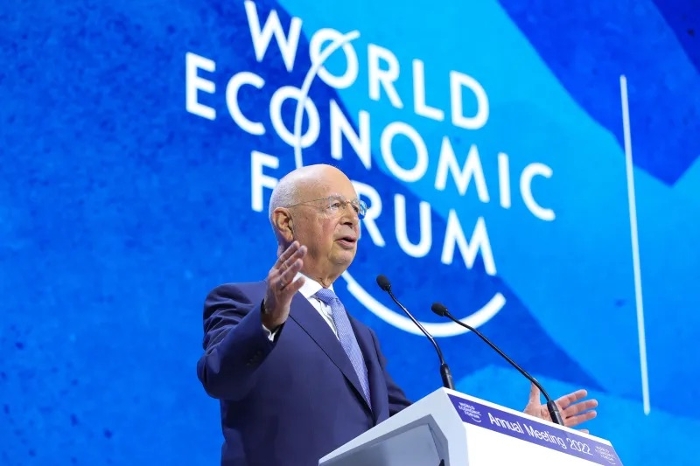
There are leaders whose institutional authority has historically made personal visibility optional. Klaus Schwab has long been one of them.
He founded the World Economic Forum in 1971. He created Davos. He spent more than fifty years at the centre of global economic and political discourse, sitting across the table from heads of state, CEOs of the world's largest companies, and Nobel laureates. His name is known in every boardroom on the planet.
And yet, in late 2025, he sat down in front of a ring light, opened LinkedIn, and started recording videos.
That decision is worth understanding.
The gap that tells the real story
Schwab joined LinkedIn in 2020. His early activity was what you would expect from someone of his institutional stature: resharing World Economic Forum content, amplifying the organisation he led. His personal voice was largely absent. The institution was still the platform.
Then came four years of near silence on his personal profile.
In November 2025, something shifted. He verified his identity on LinkedIn, a deliberate, formal recommitment to the platform. And then the content changed entirely. No more institutional reshares. Instead: direct-to-camera videos recorded in his study, behind-the-scenes glimpses of media appearances on CNBC Africa and Anthony Scaramucci's Open Book podcast, personal reflections on aging, AI, and the future of society, and a LinkedIn newsletter through the Schwab Academy called The Intelligent Age.
The content is unpolished in the best possible way. A ring light. A bookshelf. Him, speaking directly to whoever is watching. No press office filter. No WEF branding. Just Klaus Schwab, building an audience of his own.
He currently has 27,661 followers. For a man who convened world leaders for half a century, that number is remarkably modest. Which is precisely the point. He is not coasting on existing fame. He is genuinely starting to build.
The institution and the individual
For most of his career, Schwab did not need a platform. He had the WEF. The institution was the megaphone. The annual meeting in Davos was the content. The organisation's reach and convening power meant that his ideas travelled the world without him ever needing to post on a social network.
This is how influence worked for most leaders of his generation. You built a great organisation, and the organisation carried your voice. The individual and the institution were inseparable.
What his return to LinkedIn in 2025 signals is that this is no longer enough. The institution no longer carries the individual automatically. Even with fifty years of institutional credibility behind you, if you want to reach people directly, to share ideas, to build trust, to stay relevant in the conversation, you have to show up yourself.
Why LinkedIn, and why now
LinkedIn has become the default professional public square. Over one billion people are on the platform. It is where business decisions are shaped, where talent forms opinions about leaders, where ideas reach the people who act on them.
But the more interesting question is not why LinkedIn. It is why someone like Schwab felt the pull toward building a direct personal audience at all, and why the shift happened so visibly in 2025.
Audiences have fundamentally changed how they receive ideas and grant credibility. A white paper published by an institution carries less weight than a video from the person who wrote it. A press release announcing a new initiative reaches fewer people than the founder speaking directly to camera about why it matters. Formality has given way to directness. Institutional voice has given way to human voice.
Schwab sitting in front of a ring light to record a video for LinkedIn is not a desperate attempt at relevance. It is an accurate read of where attention now lives. And the fact that someone of his stature has made that read and acted on it should tell every other leader something important.
The pattern every leader should notice
There is a consistent pattern in how personal branding adoption moves through the leadership landscape. It starts with founders and entrepreneurs, the people who have always understood that they are the brand. It moves to tech CEOs, who are native to digital culture. It then reaches the mainstream executive class. And eventually, it reaches the figures who seemed most immune to it.
Klaus Schwab is in that last category. The man who built the World Economic Forum and turned Davos into the world's most influential annual gathering, recording videos on a ring light, building a newsletter audience under his own name.
Leaders who assume this shift does not apply to their level may be underestimating the structural change underway. The signal arrived when the founder of the World Economic Forum decided he needed a direct audience of his own.
What it means in practice
Senior leaders who begin building a direct audience before they urgently need one are likely to benefit from long-term compounding effects that become increasingly difficult to replicate later.
The strategic question for leaders is less about whether their ideas matter and more about whether those ideas are discoverable to the audiences who shape markets, capital, and talent.
A title, a track record, an institution. None of these carry your voice the way they once did. The leaders gaining ground today are the ones who show up directly, consistently, and with a point of view that is recognisably their own.
Klaus Schwab understood that. After more than fifty years at the centre of global institutional power, he sat down in front of a ring light.
It becomes difficult to argue that this shift does not apply more broadly across leadership.
The bottom line
If someone who shaped global policy for over fifty years has decided that showing up on LinkedIn matters, the debate about whether this dynamic applies to senior leadership is increasingly difficult to sustain. What remains is how quickly senior leadership across industries integrates this shift into long-term digital reputation strategy.